Chakras
Maps of the body looking beyond. Pop, sacred, surrealist. a Times Square effect of desire.
Critical text
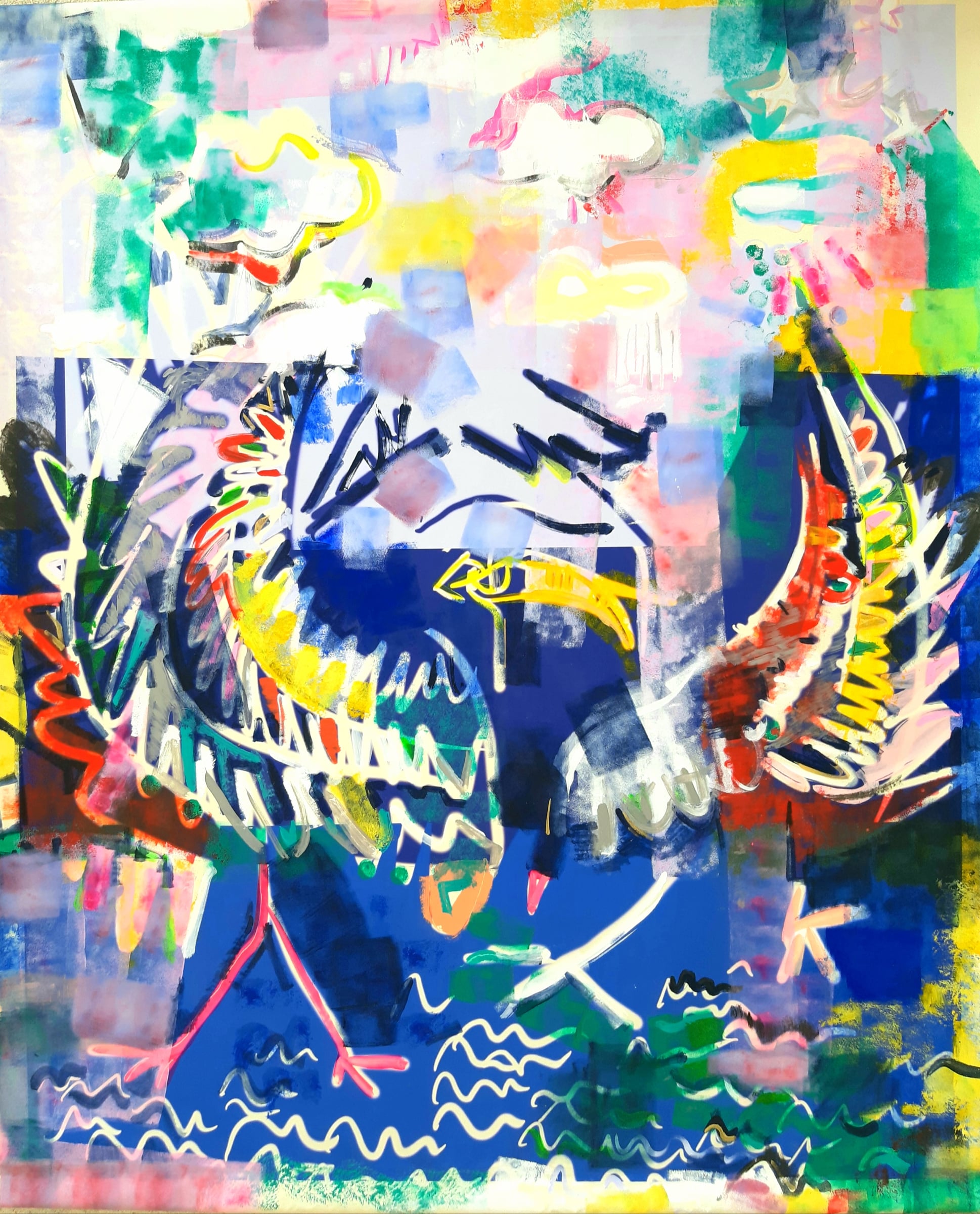
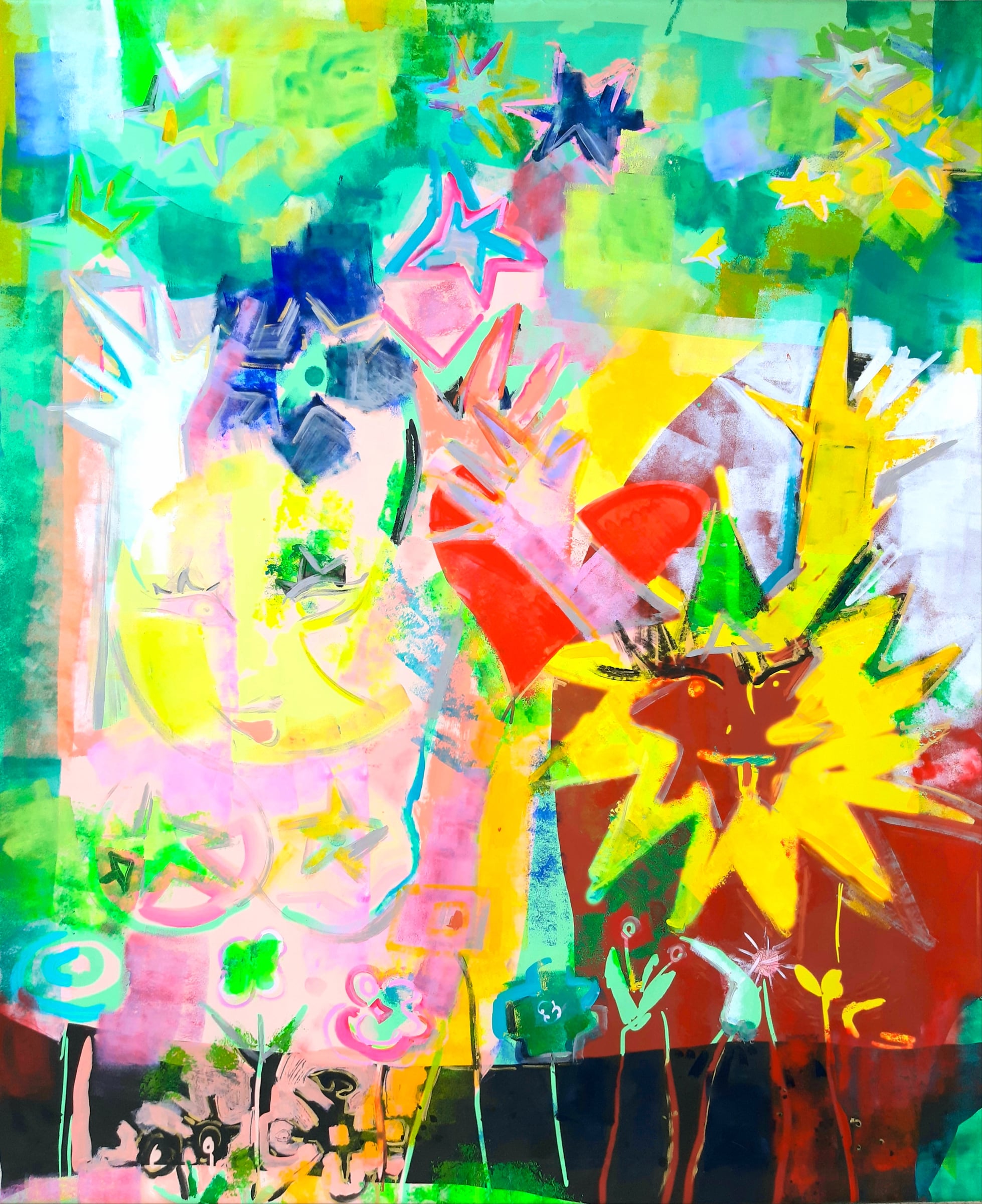
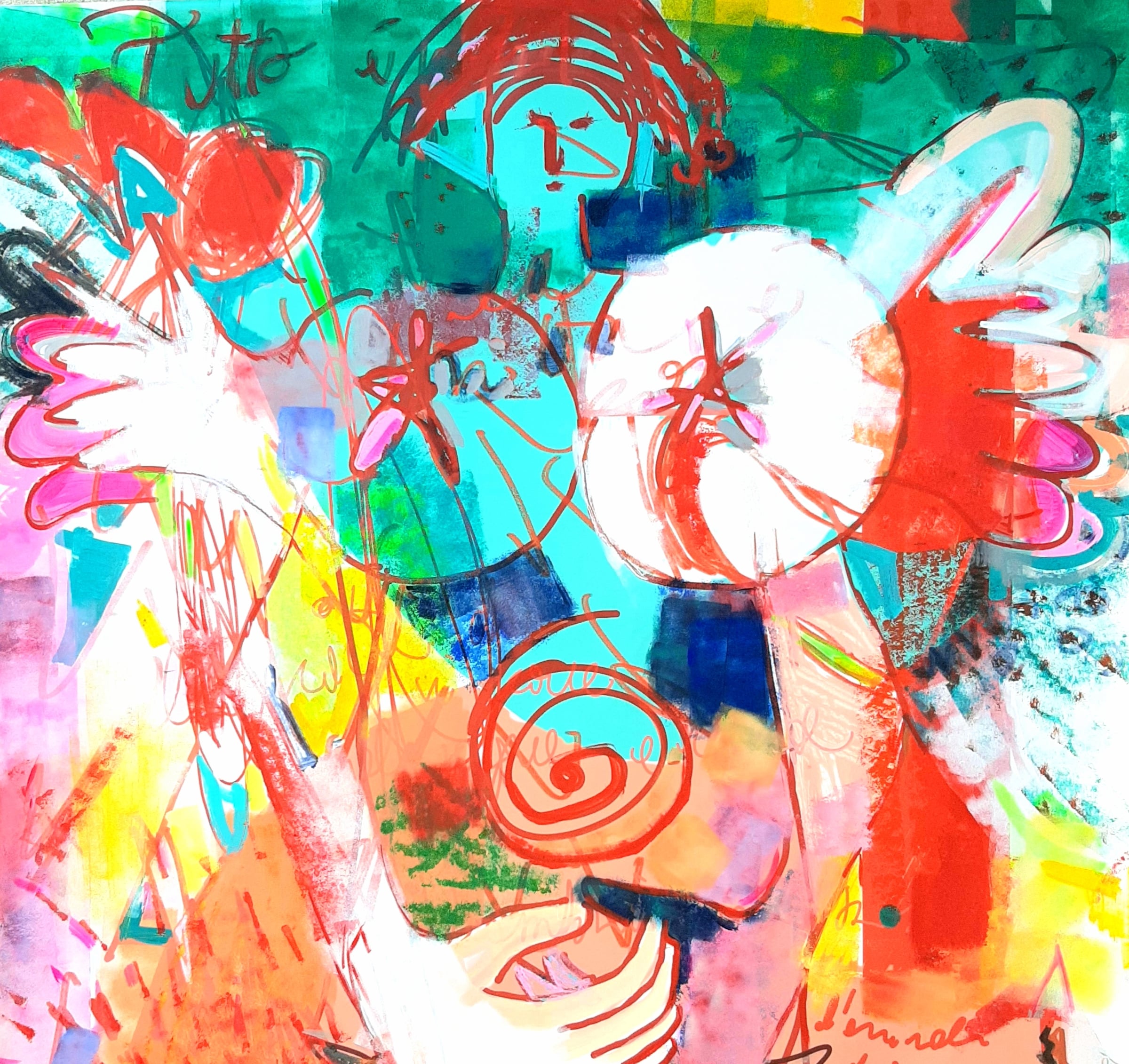
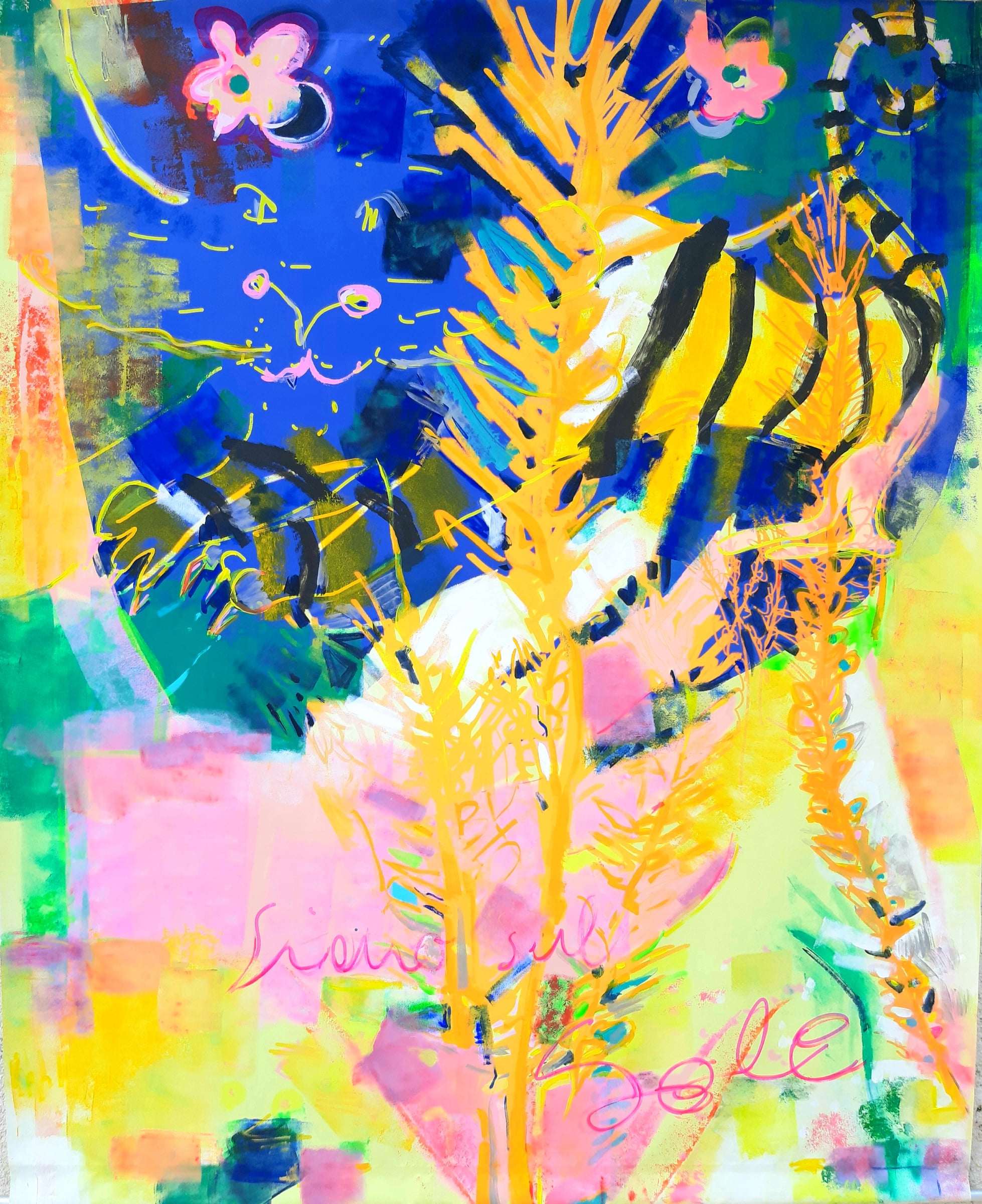
Ivo Cotani's works are maps. scale representations of places, oriented by the body and its physical perceptions. The body is the absolute protagonist of these works, omnipresent and pervasive, with more or less explicit faces, arms, hands, fingers, sexual organs. Stylized or consistent bodies, erect or extended, compact or dismembered. It is the body, with its perceptive apparatus, that determines the vision of the world: Cotani's art is phenomenological at its core.
The style moves between modern and pop. Sometimes it seems to see an Andy Warhol with elements of Rousseau the Customs Officer: large, disproportionate, naïve animals, standing out against bright colors. yellow, orange in highlighter mode. The reference to advertising is evident not only in the compositional process but above all in the scenographic effect, with four large canvases "suspended" at the center of the Sala Cola dell'Amatrice in a truly disruptive "Times Square" effect.
The painting is not marked by lines: it proceeds by color backgrounds that are partly geometric (digital) and partly free and shaded (pictorial). The coexistence of humanity and animality seems the result of a fascination for Egyptian art. Beyond the human and the animal, we can speak more generally of "forms of nature", of "art of nature".
Finally, attention to the sacred must be emphasized. The sacred is present not only in the mythological dimension (the Mother Goddess, the satyrs) but also in the more properly Catholic one. a truly surprising element. The nativity is revisited with a modern language that confuses, because the body of Christ seems more like a deposition than a birth. An irreverent reading that recalls certain surrealist representations of Buñuel.
In all of Ivo Cotani's works emerges the sense of a research that moves between maps, bodies, places, perception, the sacred. A research that involves even the more material aspects of his artistic production.
Critical text by Stefano Traini
Download PDF ↓Click to zoom · click again to close · move mouse to pan